


Overview
The GFF Data Portal has been developed in close collaboration with GFF partner countries. This online platform provides transparent, user-friendly access to reproductive, maternal, newborn, child and adolescent health and nutrition (RMNCAH-N), health systems and health financing data for GFF partner countries, to support the use of data for policy, planning and implementation decisions.
The GFF Results Framework 2026 to 2030 is the primary mechanism for monitoring and reporting on the performance of TRANSFORM 2030. It operationalizes the strategy from a measurement perspective and was developed through a consultative process led by the GFF Secretariat and endorsed by the GFF Trust Fund Committee and Investors Group. It comprises the GFF key performance indicators, the core impact and outcome indicators, a gender indicator and health financing indicators.
The portal is part of the GFF’s focus on results under its 2026 to 2030 strategy, TRANSFORM 2030, and of an approach to results measurement that builds on, aligns with and aims to strengthen countries’ own data systems, sources and capacities. Through this partnership-based approach, the GFF supports countries to strengthen their analytical capacity and to use data for decision making at national and subnational levels, including through rapid-cycle analytics and data use support.
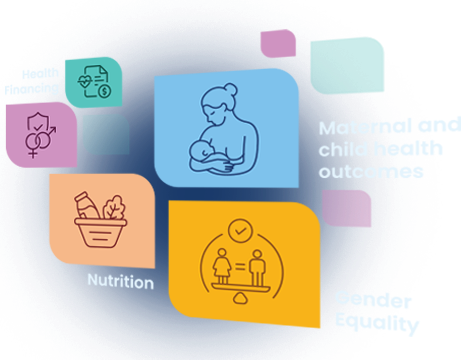
The portal is organized around the TRANSFORM 2030 strategy: the delivery of quality, affordable essential health and nutrition services (maternal, newborn and child health, nutrition, sexual and reproductive health and rights, adolescent health), the transformation of health systems (financing, quality of service delivery and commodities, sustainability and resilience) and the strategic enablers of gender and equity, partnership and results measurement.
The data portal comprises the most recent data from three primary sources:
- Output data collected on a quarterly basis by the GFF Secretariat.
- Outcome data collected from each GFF partner country annually from health and financial information systems, including publicly available World Bank project data.
- Impact data from population-based surveys and UN interagency estimates, and expenditure data from the System of Health Accounts.
For more information on the indicators and data sources, please see: